Thursday, November 19, 2015

"Jammin'" with Alexander Hamilton

     “I’m working on a hip hop album… it’s about the life of somebody who I think embodies hip hop, Treasury Secretary Alexander Hamilton.” In 2009, these words rang out from the mouth of a young Puerto Rican American playwright performing at the White House. Six years later, when Alexander Hamilton made its Broadway debut, it would become one of the most successful productions on the live stage. The musical incorporates hip-hop, R&B, and jazz to introduce the life of the youngest Founding Father. Through rap and and pop music, the play follows the ascension of the poor, “bastard orphan,” who after publishing an essay that depicted the carnage of a hurricane in his home town, is invited to New York to further his education. Through a multi-racial cast, the musical highlights the young immigrant’s interaction with some of the most familiar figures in American history—George Washington, Thomas Jefferson, the Marquis de Lafayette—in his rapid rise to power. The entire play is narrated by Vice President Aaron Burr, the man who ultimately kills Hamilton in a duel.
     Yet the production is truly fascinating for the empowering effect it has on readers.  According to biographer Ron Chernow, whose work inspired the development of the musical, Hamilton lived every day from the age of 14 as if the future was uncertain, leading to his incredible work ethic and political ascension. This ambition was also apparent in his political activism; he was responsible for the creation of the first fiscal system, monetary system, customs service, and central bank. Hamilton’s legacy struck an especially powerful note with immigrant Lin-Manuel Miranda, the playwright and title actor of the show. Like Hamilton, Miranda was recognized early in his career, when he performed the first version of “Hamilton Mixtapes” at a White House reception in front of the president and vice-president. There are two lessons that I drew from this unique story.
     First, life is short, so make the most of today while you have the chance. From the moment he stepped onto America’s shores, Hamilton participated actively in national politics, quickly becoming a leader in the Revolutionary War. In high school, Lin-Manuel Miranda didn’t think he fit in with the other students at his school and he struggled to compete academically with his classmates. But this struggle only made Miranda more determined to find his passion quickly and focus his efforts in the field that best suited him. After deciding on theater in his high school years, he began to take leading roles in every school performance. Though his family was not wealthy, he purchased as many Broadway albums as he could find and began to memorize them in his free time. All of his efforts converged in college, when far before any of his peers were achieving their dreams, Miranda completed his first musical production, In the Heights, which was turned into a Broadway musical and won the Tony Award in 2008.
     Lin-Manuel Miranda’s merging of modern forms of music with American history has led to a ground-breaking work in which this famous Secretary of the Treasury is seen in the context of American culture and dynamics in the present. This play redirects the eyes of contemporary American audiences to historic figures like Alexander Hamilton. In addition to being on the $10 bill, Hamilton has played a critical role in constructing American society  as we know it today, and we must continue to study and recognize historical figures in order gain a deeper understanding  of the society that surrounds us today. As any viewer of the musical Alexander Hamilton can attest, Miranda’s work has brought new meaning to the age-old idea that “those who do not remember their history, have no future.”

Sunday, November 1, 2015

A Way to Unity- Mindframes School Writing Competition

I step onto the edge of the blue mat. With a quick, measured breath, I shout "taekwon!" and stride up to the wooden board holder. The referees, bearing staffs adorned with red and blue flags, stand at the center of the mat, staring stiffly ahead. From above, I can feel a hundred pairs of eyes observing my approach. Watching but not seeing, they chatter with members of their own country, each group speaking in its own tongue.  Hola's and duibuqi's, "Quoi de neuf?" and “Go USA!” ring out over the din, but few people are willing to interact with those of a different nation. People from all over the world pack the stands, but as if to assert and stand by their distinct identities, each group takes care to differentiate their portion of the stadium with national flags, banners, and brightly-colored jerseys from their country.
For a moment, I allow the noise of the crowd to fade into a subdued buzzing in the back of my mind. My breathing slows as I focus on the wooden board in front of me. Every muscle in my body is tense with anticipation as slowly, deliberately, I take a step backwards. For a lightning instant, the pressure of a thousand chanting voices and wailing air horns in the audience pushes against me, and I freeze. But with a sudden burst of adrenaline, I explode toward the target.  “Snap!” the sharp splintering of the board pierces the air, followed by a dizzying roar as onlookers rise, cheering in appreciation. In that instant, I see and hear not individual countries in the crowd, but a single community, standing and clapping together, united in the exhilaration of the moment. The discordant clashes of conversations in various foreign languages melt away, replaced by the unanimous tongue of the world community. As I gaze over the crowd, for a second, I am a part of this united nations, in which no language or cultural barriers can dent our shared heritage.
By the time I return dazedly to my coaches, individual conversations have re-started, and the arena is again filled with the noise of hundreds of clashing languages, as each person cheers for athletes from his own country. Yet small signs of our moment of unity remain. As I pass through the crowd, one or two of the waiting groups of athletes meet my gaze, and they smile and nod encouragingly. When I look up at the spectator bleachers, a young boy from New Zealand cheerily waves his flag at me. Towards the end of the evening, one of the Irish competitors in my division comes up to me and hands me a miniature golden pin with a carving of the Irish and American flags crossed and waving together. Receiving the small token, I am overwhelmed by a sense of gratitude for the opportunity that this event has offered me.  For the time being, however, this marks the end of the 2013 Taekwondo World Championships in Spain.

Two years have passed, and the details of this week have already begun to fade from my memory. But I know I will never forget the sensation of that uplifting moment when the board shattered, and every heart in the arena momentarily beat as one. As I write this, I glance at the two miniature flags still sitting on my desk and feel a deep thrill. If I close my eyes and listen hard enough, I can still hear the echoing cheers in the tournament arena, shouting in a language understood by people from all over the world. In the truest sense of the word, the breaking of a single wooden board became, for me, a way to unity.

Saturday, October 24, 2015

The Cross in Human Rights (10.5.15)

The year is 1870. Bullets whiz dangerously through the air as French and German troops fire viciously at one another from behind tall barricades. Among the wounded soldiers, a determined young woman known as the “Angel of the Battlefield” flies back and forth between the moaning men. Affixed to her white collar is a bold red cross. On June 26, 2015, a throng of lobbyists crowded the steps to the Supreme Court building. An expectant hush reigned over the group, which was waiting for the final decision to be announced.  Many of the signs, reading “Rainbows reign!” and “Equality in marriage,” proudly depicted the image of two crossed lines topped with a circle. Again and again throughout history, the symbols of the cross and its various manifestations have appeared as proud representations of the movement for human rights.
                When one speaks of human rights around the world, it is impossible to overlook the International Red Cross, whose mission statement of “providing compassionate care to those in need” directly addresses its goal of fulfilling the basic human rights of the most deprived individuals. The organization’s trademark symbol (a red cross on a plain white background) was first used by the founder of the American Red Cross, Clara Barton, who devised the emblem while serving troops in the Franco-Prussian War. In the modern human rights sphere, the humanitarian work of the Red Cross has been critical in supporting those displaced by the Syrian Refugee Crisis and struggling to find daily sustenance and shelter.
                The Universal Declaration of Human Rights, arguably the most authoritative international text on the subject, clearly states that the guarantee of human rights cannot be based upon “distinction[s] of any kind” including gender-based categories. This fundamental promise to a gender-blind application of rights has become an especially contentious issue in the past decade, as more and more countries have legally accepted the rights of homosexual individuals to engage in the equal right to marriage. (As of 2015, twenty-two countries have legalized same-sex marriage, with the first being the Netherlands in 2000.) Activists in the movement for LGBTQ rights have adopted the standard gender symbols (denoting males and females) as icons for their campaign.
                Regardless of how one chooses to interpret the cross, one will always be reminded of its most prevalent usage as the Christian Cross, recalling both Jesus’s crucifixion and the Holy Trinity. Since around 1200, when Saint Francis and his companions began living in solidarity with the poor, preaching about the holiness of a simple life, the Christian religion and orders such as the Brothers of Holy Cross have become associated with acts of goodwill and the delivery of aid to the disadvantaged. In the New Testament, alms-giving is cited as a key tenant in the Christian life.
                Yet the close association between religion and the delivery of human rights has been repudiated in several situations around the world. In North Korea, Christian missionaries attempting to provide refugees with protection have been accused of prioritizing their own religious agenda, making the victims’ conversion to Christianity a perquisite for their ability to receive aid. Other religions and indigenous belief systems that perpetuate gender discriminatory behaviors have been seen as conflicting with the fulfillment of universal human rights.

While the cross has had a long history in the campaign for human rights, several notable controversies have forced some to question its place in the movement and its ability to serve as a true champion for our fundamental rights.

Sunday, August 16, 2015

Final Paper: An Analysis of the Case of Kenneth Bae from the Perspective of Religious Rights, Freedom of Conscience, and a Proposed Solution

            The United States historically has honored the religious rights of its citizens, a tradition which Martha Nussbaum characterizes as the "fixed star" of American legal history (Nussbaum 21). The recent case of Kenneth Bae’s missionary action, labor camp imprisonment in North Korea and the subsequent diplomatic developments could be viewed in line with the constitutional preservation of religious rights. Yet in this specific case, the US’s protection of these rights clashed with its national foreign policy, forcing the US government to prioritize the right of its citizens to engage in religious practices such as proselytism over the sovereignty of foreign countries in managing religious activity internal to their borders. To circumvent a situation in which the US is obliged to value the constitutional rights of its citizens over foreign jurisdiction, I claim that the US government must establish a focused policy regulating the behavior of its citizens in delivering evangelistic aid to third world countries.
            On December 21, 2012, the Korean Central News Agency of the DPRK announced that it had arrested Kenneth Bae, a Christian missionary and naturalized US citizen from South Korea, for “committ[ing] crimes aimed to topple the Democratic People’s Republic of Korea” (Taylor). Mr. Bae had connections to evangelical organizations such as the Joseph Connection and Youth with a Mission, and as the founder of the Sino-based tour group Nation Tours, had travelled through the country fourteen times previously without incident (Taylor). During past trips, Bae along with members of his tour group visited orphans and provided aid to North Korean citizens, in addition to singing Christian songs, and hosting public worships designed to “allow for the walls [of religious repression] to come down in North Korea" (FlorCruz). Upon entering the city of Rason in 2012, Bae was tried for planning the “Jericho Operation,” a campaign to infiltrate and convert 250 North Korean students, and he was sentenced to 15 years of hard labor (FlorCruz). The US government responded swiftly and disparagingly to Bae’s arrest, stating that he had “no reason to be detained” and that he “should be released immediately,” a message it reinforced by sending North Korean Human Rights Envoy Robert King to negotiate Bae’s release (US Vice President Joe Biden). North Korea arbitrarily rescinded its invitation to Ambassador King, and nine months later, the US managed to secure Bae’s release when it dispatched Director of National Intelligence James Clapper in a second diplomatic overture to the regime. This is not the first time the US government intervened to negotiate the release of an American missionary that had run afoul of the DPRK’s strict religious laws; most recently in May 2014, Jeffrey Fowle was arrested for leaving a bible in a North Korean nightclub and was released a month before Bae (Baker and Gladstone).

The freedom of conscience in humanitarian aid versus the right to proselytize
            While Kenneth Bae was primarily arrested as a consequence of his proselytizing activities, he was motivated to repeatedly enter the DPRK by a desire to deliver humanitarian aid to the North Korean citizens, a compulsion which I will analyze alongside his evangelistic intentions. It is commonly accepted that humanitarian aid, fundamentally, is a matter of human rights. This is evident from the viewpoint of the individual needing assistance in North Korea or other third-world countries, who through the aid, gains full access to "component rights" such as the right to life, food, health and medical services (Pietropaolo 4). Yet given that individual aid workers provide charity due to a personal sense of sympathy and moral duty, the distribution of humanitarian aid can also be considered an aspect of the donor’s right to freedom of conscience. The ability to provide humanitarian aid to those living in third world countries, and therefore act according to one’s conscience is firmly entrenched in the universal right to freedom of conscience, which is expressed in Article 18 of the Universal Declaration of Human Rights.
            Evidence drawn from aid-giving practices around the world show that religiously-motivated groups are more inclined to deliver charity than non-religious ones, in light of the spirit of generosity and care for one's neighbor that are central to the practices of many major religions (Schnable 3). Regular involvement in international humanitarian aid is stimulated by the “diffuse cultural ambience” that characterizes religious communities and also exposes members to greater opportunities for almsgiving (Schnable 2). Especially in developing regions in Latin America, missionaries of religions such as Christianity that operate with a “preferential option for the poor,” raised awareness on the plight of the lower classes and opened the way to charitable contributions from the international community (The Guardian Global Development Students Speak). Furthermore, the lack of returns or rewards that a donor receives for his contribution in third-world countries means that those motivated by an external, usually religious cause constitute a significant number of the charitable workers in these areas. Due to the tendency for religious groups to bring humanitarian aid to third world countries, it has been common for the delivery of charity to be associated with, to the extent that it is even indistinguishable from, the religious proselytizing activities of missionaries.
The provision of aid to third world countries by missionaries with proselytizing intentions has historically caused much controversy. This takes place when a religious group’s evangelical objectives interfere with, or are manifested in the distribution of humanitarian aid. Some Christian evangelists from South Korea, situated in China across the border from North Korea, have been known to openly state that their ultimate goal of helping North Korean refugees is to inform them of God, even establishing the defectors’ conversion to Christianity as a prerequisite for their protection and safety (Jung 151). Furthermore, such a manifestation of the foundational religious goal of converting non-believers in aid delivery can lead to a perception of the giving of humanitarian aid as treading on a fine line between acceptable and unacceptable forms of religious practice in third world countries. This distinction becomes significantly harder to perceive in North Korea’s convoluted legal norms, where foreign missionaries must pay close attention not to the nominal guarantee of the right to freedom of religious belief in the state Constitution, but to the implemented and practiced governmental attitude toward religious practice and external religious influences. The North Korean Constitution in essence is unfavorable toward the religious practices of foreign missionaries in the DPRK, due to its purely superficial protection of religious rights (Constitution of the DPRK, Art. 68). One can speculate that Mr. Bae was unaware of the situation of religious freedom in North Korea, which requires government approval, which, in itself, is unfavorable to religious missionaries.

The culture of religious liberty in the United States
            In order to fully understand Mr. Bae’s arrest and the extent to which his “crimes” could be discussed under the right to freedom of conscience and religion, it is necessary to examine his actions in the national, cultural context from which they originated. Authors Brian Tierney and Martha Nussbaum effectively engage in conversation concerning the character of the American attitude of religious toleration into which Kenneth Bae moved at age 18 and in which his missionary and humanitarian aid work to North Korea were rooted.  
According to Tierney, American history was an indirect, non-progressive story that confounded the clear message for toleration of religious beliefs and practices proposed in founding documents. Early American leaders like William Penn and Roger Williams emerged as the strongest and most forward-thinking proponents of religious toleration in their age (Penn’s conception of the liberty of thought and belief as the “natural right of all men” formed the basis on which Pennsylvania’s state constitution was later founded (Tierney 42).) Such advanced ideological conceptions were unable to curb the persecution of heretics, outsiders, and members of minority religions, however, that would be ever present throughout American history, and which Tierney believes, proves that intolerance is an unavoidable pattern in human conduct. For Nussbaum, on the other hand, religious equality and full respect for religious practices form the foundations of the American legal system, the modern understanding and application of which has evolved gradually through the experience of the American people in a diverse society. Nussbaum suggests that these pillars tie together various characteristics of the US’s national religious scene, including nonestablishment of state orthodoxy, separation of church & state, and special accommodation of religious minorities to allow for “individual religious choice” and “equal freedom...to worship in [one’s] own way” (Nussbaum 19). Nussbaum pays close attention to what she calls the “respect-conscience principle” of the American religious tradition, under which the government must “respect the fact that [different religious groups] have different religious commitments,” even when it does not believe that these beliefs are “correct, or… valid routes to the understanding of life,” opening the way for controversial practices such as proselytism (22-23). The historic occurrence of persecution and coercion of heretics that Tierney notes contributed to a “new depth of insight” into founding documents, whose meaning became deeper and more widely applicable through the American experience (357).  
Regardless of their perspectives on the course and advancement of religious liberty throughout history, both authors concur that the American tradition has been particularly advanced from inception in its promotion of a broad interpretation of religious rights. Moreover, the prescient upholding of religious liberty in the founding documents and the works of the founding fathers suggest that Kenneth Bae’s evangelistic practices were in compliance with the spirit of the religious rights enshrined in the earliest American legal instruments.
The modern-day protection of religious rights in the US and around the world was greatly influenced by the terms of the UDHR, with its protection of the universal right to freedom of thought, conscience, and religion (UDHR, Article 18). Many countries have interpreted these terms as mandating a certain degree of government secularism in order to preserve free religious choice, though the manner in which they implement secularism varies significantly by country. The principle of secularism or laicite constitutes the official state policy of France, and in 2010, the French government abolished the wearing of religious face-coverings and head gear in public places, in an attempt to uphold this policy and appear “politically correct” (McGoldrick 254). This can be compared to secularism in the United States, the enforcement of which promotes a “truly equal liberty” which gives equal deference to the practices of every religion (Nussbaum 22). In terms of the yearly output of missionaries, 127,000 of the world’s 400,000 evangelists in 2010 originated from the US, while the number of French evangelists was not even mentioned in many studies (Lovering). This statistic proves that the historic tradition of protecting religious rights in the US has had a notable impact on the American interpretation and the implementation of Article 18 of the UDHR.
Then what role has proselytism played in the liberal environment of the United States? Nussbaum’s perspective on the preservation of religious liberty throughout American history and the US’s interpretation of the UDHR portray the United States as an environment generally favorable to religious practices involving proselytism. In a 1940 court case concerning the religious practice of members of the Jehovah’s Witness, the US Supreme Court unanimously reaffirmed the US’s commitment to defending the right to engage in evangelistic behavior; on the grounds of protecting the liberties of American citizens in the long view, the Court Justices considered the right to engage in religious proselytism essential to enlightened opinion and right conduct on the part of citizens of a democracy (Cantwell v. Connecticut).
Yet as demonstrated by the contrasting interpretations of secularism, a principle commonly derived from the terms of the UDHR, in the US and France, the influence of the culture and tradition of a country on its protection of religious rights allows for highly disparate treatments of this rights category. While exercising a right protected under American rights laws during his trip to North Korea, Mr. Bae ran into an irreconcilable conflict between the religious rights instituted in the US and the DPRK, compelling the US government to intervene in an attempt to free him and restore his rights. The liberal reading and implementation of international rights documents in the United States can therefore have consequences outside the religious context, on the country’s diplomatic and political position in the international realm.

Questions on the US government’s duty to restore Mr. Bae’s rights and secure his release
Once the US government’s upholding of the religious rights of its citizens extends into international discussions, it becomes relevant to various international agreements regarding the sovereignty of nations over their citizens overseas, including the 1963 Vienna Convention on Consular Relations, ratified by 177 state parties including the US and DPRK. While the consuls of member states under the Vienna Convention function to protect the interests of its citizens in foreign countries, this protection must “be exercised in conformity with the laws...of the receiving state” (VCCR, Article 36). When the citizen of a member state of the Convention is arrested or detained in a foreign country, consular officials are permitted only to converse with him and arrange for legal representation, while still respecting the authority and decisions of the receiving state (VCCR, Article 36). US actions with regards to the arrest of Kenneth Bae were therefore not in compliance with the established international agreements. Throughout his sentencing and imprisonment, the US government, through official remarks and the sending of envoys to negotiate Mr. Bae’s release, clearly demonstrated and acted upon its disapproval of the DPRK’s actions.
Certain factors allowed for Mr. Bae’s religious rights to override current US foreign policy, among them, the perception of the involved foreign country as inferior to the United States in its protection of human rights, given its poor track record in the international community. The significance of these factors in determining US actions can also be seen in the case of Saeed Abedini, an Iranian American pastor who, like Bae, was detained “on charges related to his religious beliefs,” while establishing Christian churches and creating orphanages in the repressive state of Iran in 2012 (“Detained U.S. Citizen Saeed Abedini”). In a press statement, Secretary of State John Kerry expressed that the “best outcome for Mr. Abedini” was “immediate release” by Iranian authorities on humanitarian grounds (“Detained U.S. Citizen Saeed Abedini”).
As seen in the cases of Mr. Abedini and Mr. Bae, the domestic and international position of the sending state is substantially weakened by the detainment of its citizen overseas. From an international standpoint, the presence of a hostage establishes a condition in negotiations between the receiving and sending state, for which the latter nation is forced to make concessions in order to secure the well-being and release of its imprisoned citizen. If the two countries were engaged in political or diplomatic negotiations prior to the arrest of the citizen, the presence of a hostage can be manipulated to the advantage of the receiving state in the larger bilateral discussion, with potentially far-reaching impacts on the outcome of the original negotiations and relations between the states. In order to free Mr. Abedini, Secretary of State Kerry “brought up Saeed[‘s case] every time he m[et] with the Iranians” for negotiations on Iran’s  nuclear capabilities, establishing another condition for which the US would have had to allow concessions to Iran in an already precarious dialogue situation (ACLJ). The United States have never established diplomatic relations with the DPRK, yet it was widely speculated at the time of Mr. Bae’s arrest that the North Korean state fully intended for his release to coincide with acknowledgement of the legitimacy of the regime or US compliance with its political demands (Taylor).
The situation of Americans detained abroad for continuing to carry out rights they had thought were their entitlement as American citizens also places internal pressure on the United States government for failing to fulfill its honor-bound duty to defend the Constitutional rights of its citizens. In news interviews, members of Mr. Bae’s family repeatedly called on President Obama to “push harder for [Bae’s] release” (Hancocks) Mr. Bae’s case illustrates one example of an exception in US compliance with international agreements when the religious rights of its citizens are involved. Both intervention and nonintervention in these cases lead to significant consequences for the US, due to the lack of regulatory statutes detailing the rights of missionaries working overseas.

Inadequacy of current international and national human rights instruments
A careful examination of existing national and international legal measures addressing the religious rights shared by members of the international community, however, reveals that the issues of controversial religious rights such as proselytism and the defense of such rights in a foreign-hostage situation are insufficiently and only indirectly addressed. At the most basic level, Article 18 of the UDHR vaguely outlines the universal right to "thought, conscience, and religion," which can be exercised either "in public or private," and manifested in a variety of ways: through "teaching, practice, worship, or observance" (UDHR, Article 18). Not much progress was made in 1954 by the UN Sub-Commission on Prevention of Discrimination and Protection of Minorities, which stated that "everyone shall be free to adhere, or not to adhere to a religion or belief" and declared the right to remain free from subjection to "material or moral coercion likely to impair [one's]...religion or belief," but also called for the freedom "to teach or to disseminate" one's religion or belief publicly and privately, without properly addressing the overlapping area of these two rights (“Draft Principles on Freedom and Non-Discrimination in the Matter of Religious Rights and Practices”). As previously established, such broad and open terms have allowed for UN member states to institute laws that range from near outright prohibition in North Korea to relative toleration of religious proselytism in the United States, while still remaining within the boundaries asserted by the United Nations. Meanwhile, UN instruments such as the Convention on Racial Discrimination, which could establish more definite boundaries when applied to protection of the right to evangelize and share one's faith with others, are not considered binding by UN member states. The United Nations’ legal instruments addressing the religious right to proselytize are therefore too ambiguous to be considered valid founding documents for the development of rights legislation within member states, and may have contributed to foreign-hostage situations such as that of Mr. Bae.
While the United States generally seeks to preserve the human rights of its citizens, laws concerning the rights of citizens and limitations on their religious worship and practices have instituted diverse rulings on proselytism. The Establishment and Free Exercise Clauses of the First Amendment prohibit establishment of a state church and the right to freely engage in religious practice according to one's individual choice, which like Article 18 of the UDHR, does not offer a solution for a conflictual situation in which the right to practice one's chosen religion is viewed in the context of the right to evangelize, a practice that may be central to one's religion. Furthermore, Supreme Court rulings on the proselytism of members of the Jehovah’s Witness, which I mentioned above as having had a significant influence on the US’s treatment of the practice, deliver an often contradictory message. According to the decision in the Cantwell v. Connecticut court case, restriction of the right of citizens to engage in proselytism, regardless of the appearance of the action as a “rank error to [one’s] neighbor” and the proselytizer as one “resort[ing] to exaggeration,” is contrary to the spirit of a democracy (Cantwell v. Connecticut). Yet this statement was preceded by the declaration that “a State may...regulate the time, place and manner of soliciting upon its streets, and...safeguard the peace, good order, and comfort of the community"(Cantwell v. Connecticut). The state theoretically has the authority to deny protection to religious proselytism on the grounds of preserving the subjective notion of “good order” in society. Extending the scope of this reasoning to the international sphere, the burden remains on the US government to prove why generally-applied legal protection should not be extended to specific religious practices, while the North Korean government’s judgement establishes the standard against which religious practices are approved on a case-by-case basis.
Moreover, there is very little national legislation currently in place that specifies the rights, especially religious rights, guaranteed to American citizens abroad. I established above that since the ratification of the Vienna Convention on Consular Affairs, US Consular officers have only been authorized to act as points of communication and support for US citizens subject to foreign legal processes of indictment and prosecution. Yet the US’s actions in seeking to overturn such foreign rulings suggest that in certain cases, the American government is compelled to defend the rights of its citizens, even at the cost of weakening its international position and breaching international agreements. The prevalence of US intervention on behalf of missionaries arrested abroad can be attributed to the specific case of religiously-motivated charity, in which restriction of the activity on religious grounds can interfere with the realization of other categories of rights, notably the right to freedom of conscience. In light of the US government’s multiple international interventions to restore the religious rights of its detained citizens, one could cite the 1940 court ruling for Reid v. Covert which “reject[s] the idea that, when the United States acts against [or for] citizens abroad, it can do so free of the Bill of Rights,” and other legislation detailing the rights promised to US citizens in the country (Reid v. Covert). While the US legal structure offers strong protection of the religious rights of its citizens, the changing character of its rulings regarding proselytism and its unclear stance regarding intervention on behalf of detained citizens necessitates the development of a new policy that specifies and qualifies the right of American missionaries to proselytize in foreign, third-world countries.
In order to grant necessary respect for freedom of conscience (embodied in the delivery of humanitarian aid) and religious rights (fulfillment of the foundational religious practice of proselytism), and ensure that both rights are carried out with the greatest possible freedom, I propose the development of a US foreign policy tailored to the distribution of humanitarian aid in third world countries by American missionaries. Above, I have established that charitable activities have been associated with the practice of evangelism, to the extent that the former practice is almost indistinguishable from the latter. However, it is necessary for the two practices to be seen as distinct activities, the conscientious act of aid-giving to the people of third world countries being one that is universally protected under the right to freedom of conscience and proselytism being a public manifestation of the donor’s religion. With this distinction in mind, religious groups should have the ability to engage in both aid-giving and proselytism, so long as the intention to proselytize is not merged with the intention to provide aid; in clearer terms, one’s agenda for evangelism cannot interfere with the successful delivery of aid or become a condition necessary for the people in a third world country to receive aid. It is important to note that this distinction does not prohibit American missionaries from accomplishing religious proselytism, but instead states that the evangelistic intention should not be manifested in the act of distributing humanitarian aid. A foreign country may be opposed to foreign missionaries delivering charity, or the potential for such groups to focus on an intention to proselytize. In that case, the United States government must consider the environment and take regulatory measures which constrain the ability of American missionaries to disseminate aid in particular countries. Rather than imposing an unlawful restriction on missionaries’ religious rights, this measure identifies the favorable environments in which religious groups can complete their charitable activities without fear of arrest. It will then be within the best interest of missionary groups to act according to the recommendations of the US government and respect the norms of the foreign countries in which they do practice by making a careful distinction between the act of aid-giving and proselytism. By upholding their role in the agreement with the US government and the international community, American missionaries such as Kenneth Bae will be compelled to pay keener attention to the international and diplomatic impacts of their activities.

Conclusion
            When American citizen Kenneth Bae was arrested in 2012 while leading a tour of the DPRK, the immediate public outcry over the sentence raised important questions regarding the DPRK’s reaction to Mr. Bae’s activities. While working in and delivering humanitarian aid to orphanages during previous trips to North Korea, Mr. Bae’s acts of charity were protected under the universal freedom of conscience; one can surmise that his attempts to fulfill the underlying evangelistic intention were seen to be problematic by the North Korean regime, leading to his imprisonment. The United States celebrates a tradition of religious liberty, and it was in this environment that Mr. Bae’s determination to travel to North Korea for evangelistic purposes took root, though it ultimately clashed with the religious norms established by the DPRK. I have proposed the establishment of the above policy to guide US actions in cases such as that of Mr. Bae, in light of the significant consequences that US intervention has had on the national foreign policy. Inevitably, any new policy will face opposition and difficulty in implementation and enforcement, especially when no such law has previously been established as a precedent. It is my hope that the above legislation will more clearly frame the issue of evangelism and humanitarian aid to third-world countries, while taking into consideration the greater context of US international relations.

Monday, July 27, 2015

Life-Hacking: Small Steps toward a Successful Schedule and Career (4.16.14)

“Early to bed, early to rise, makes a man healthy, wealthy, and wise.” But, “those that sleep now can dream, while those that do not can achieve their dreams.” Whether it is from parents, teachers, our peers, or idols in history, we live in a world of increasing pressure to be productive and successful in life. Especially with the continual rise of brilliant new entrepreneurs in the Bay Area, the expectation that we follow in their footsteps surfaces every day. In spite of this, we are never told how to succeed, and the words of role models such as Benjamin Franklin and Ban Ki Moon often deliver contradictory messages. Could there be a secret step-by-step guide to becoming a noteworthy name in history? As author Brian Tracy once stated, “Successful people are simply those with successful habits.” Take a look at the habits of five famous figures, and what it took for them to be revered.
            President Obama has inspired many Americans with his dedication to a daily workout at 6:45 A.M, but the First Lady, Michelle Obama, normally leaves the gym at this time, returning home to pack lunch for her daughters. Her workout includes forty-five minutes of cardio and forty-five minutes of strength training, and she has yet to miss more than a single day at a time. What else can we expect from the founder of the “Let’s Move!” campaign?
Adopting the lifestyle of his mother, a full-time novelist and mother of six children, Anthony Trollope believed firmly in the power of early morning inspiration, and would wake up at 5:30 A.M. to write. During this time, Trollope would sit with a watch in front of his paper, and demand of himself 3000 words by 8:30 A.M. or 250 words every fifteen minutes. At the end of his morning, he would immediately head off to a job in the postal service. Although work under such stressful conditions may seem difficult, Trollope managed to publish forty-nine novels in a period of thirty-five years, with his more famous works such as The Chronicles of Barsetshire making him the most celebrated English writer in the Victorian era.
Most heads of state keep up with the height of technology in their country: not Park Geun-hye. The South Korean president is jokingly called “the notebook princess” for her adoration of the quickly-disappearing art of note taking. From meetings with high-profile leaders, to banquets with other Korean politicians, President Park is never seen without a notepad to jot down points that arise in discussion. This habit has both pleased and annoyed fellow officials, but it allows her to be prepared to deliver remarks at all times.
Many artists will attest to the saving power of a daily cup of coffee, and composer Ludwig Van Beethoven was no different. The first order of business every morning was to make breakfast, consisting of a large jug of coffee with exactly sixty coffee beans. (He often counted out the beans one-by-one himself.) Afterwards, he would pour in an incredible amount of sugar, near filling the cup to the rim, and mix it together with a concoction of very strong, black coffee. Perhaps it was such breakfast habits that contributed to Beethoven’s brilliance at the piano, conducting, and composing, even as a deaf musician.
            Neurologist and psychologist Sigmund Freud is famous for his discoveries on the power of human dreams, but he is also known for his well-groomed appearance. After waking up promptly at 7:00 A.M. each morning, the researcher would eat a light breakfast, and spend an hour at the barber shop, trimming his beard. It was once said of him that, “[Freud possessed] a commanding air… an air of power disciplined. Even Freud’s mustache and beard were subdued to order by a barber’s daily attention.” Freud worked hard to cultivate an image that appeased his patients, and through the daily routine, he created a ritual that eventually became an essential part of this incredible life.

From artists, politicians, and writers, each of these giants possessed completely different habits, personalities, and working attitudes. So what was the secret to their success? Each of them lived strictly by a daily routine that allowed them to leave a unique imprint on the world. In order to make our contribution to society, perhaps it’s time each of us re-evaluate our lifestyles, and organize work and leisure around an unvarying time frame. 

Week 6 Response Paper: Religious Liberty

Respect for equality in the context of religious liberty is a distinctive feature of the American tradition, the modern understanding and application of which has evolved gradually through the experience of the American people in a diverse society. Nussbaum describes several distinguishing principles present in the modern American religious tradition, referencing equality as the unifying focus: nonestablishment of state orthodoxy and separation of church and state are intended to prevent the formation of unequal “in-groups” and “out-groups,” while the special treatment of minorities allows for legal accommodation and affirmative action to ensure fair equality in American society. The decisions in court cases such as Sherbert and Allegheny County successfully defended the “equal freedom…to worship in [one’s] own way” and the need to respect “individual religious choice,” and are central to demonstrating Nussbaum’s point that Americans, throughout history, have made progress in developing a framework through which equal liberty can be manifested in the legal system (Nussbaum 17, 18). This story of progression sharply contradicts Tierney’s suggestion, however, that history and social circumstances, rife with persecution and condemnation of heretical thought, have had a pernicious influence on the concept of equality encapsulated in founding documents such as the US Bill of Rights. In Tierney’s words, national experience has “distorted understanding of the original revelations,” the best solution for which is a return to the intentions of these documents (Tierney 45). There is significant evidence to support this claim; the exclusion of religious minorities such as Quakers and Mormons throughout American history forces one to consider the extent to which American religious institutions were and continue to be unequal. Even Nussbaum acknowledges that restriction of equal treatment occurs when particular denominations—such as extremist Islamic sects—are perceived by the public to be threatening to society. Yet if it is indeed true that the original American tradition of equal liberty has been corrupted by misapplication of the spirit of the founders, the founding national documents would necessarily have to encompass, even surpass the meaning and depth of the modern conception of equal liberty. This notion cannot easily be proven, due to the plurality of differing views that were behind the writing of the texts. One can also account for the controversy over the Establishment and Free Exercise Clauses as revealing the incompatibility of original documents with modern society. Furthermore, Nussbaum suggests that such a reading contradicts with the founders’ intention of establishing a broad legal framework on which new interpretations of fundamental principles would later be founded according to the changing social context, in light of their own refusal to abide by traditional ways of thinking (Nussbaum 30). To declare that American history has caused a backslide in the implementation of the concept of equal liberty, may be to fail to recognize that despite periods of inequality, the American tradition has been so entwined with the advancement of equality and liberty as to make them the distinguishing features of a national religious culture.  

Monday, July 20, 2015

Week 5 Response Paper: Cultural and Group Rights

In the case that a liberal state’s recognition of the rights of a group clashes with its protection of liberal precepts, Barry’s proposal adds greater depth to those of Okin and Kymlicka, in that he establishes as a condition for government intervention, the extent to which a group protects its members’ right of exit (Barry 158). For Okin, the establishment of special group rights to protect minority ways of life is foundational to a multicultural society. This protection should not trump the basic rights of individuals, lest a “double standard” be applied to minority groups, in which their members are not guaranteed the same rights promised to all other citizens in a nation (Okin 19). Ultimately, she urges that states take into consideration “the urgency of…representing less powerful members of [minority] groups” in the enactment of group’s autonomy (23). Kymlicka takes the argument one step further by suggesting that the main goal of protecting group rights is to ensure the development of individual self-respect and an opportunity for meaningful individual choice within one’s own cultural context, therefore justifying the granting of special rights only to internally liberal cultural groups. For Kymlicka and Okin then, the state holds great responsibility in the preservation of the basic human rights of individuals, regardless of their membership in a minority group protected by the state.
This discussion fails to address the existence of the freedom of exit and entry within a group, which Barry emphasizes as the determining factor in the balance of power between a state and its internal communities. According to Barry, states are in effect prohibited from interfering with the illiberal internal practices of a minority group, so long as it is a “voluntary association” which members join and can exit at any time of their own free will (Barry 158). Barry’s opinion is made clear through his reference to a case involving the Church of Christ, in which the Oklahoma Supreme Court intervened in the actions of the Church, only on the grounds that the institution had “impose[d] their will on the unwilling” (159). Barry raises a valid point that is not discussed but essential to Okin and Kymlicka’s establishment of a policy concerning the sovereignty of a minority with illiberal policies. However, his argument also allows for minority groups to exploit their legal status: inherently illiberal groups such as the Orthodox Jews could easily institute laws so burdensome as to offset the nominal right to exit, trapping the members in a situation in which the state is powerless to intervene (159). In the enactment of group rights and privileges, it will thus be the responsibility of the state not only to analyze the group’s adherence to the state’s liberal norms as suggested by Okin and Kymlicka, but also to assess the minority’s actual preservation of the freedom of exit. Only then can the special rights of minority groups, fundamental to multiculturalism, be effectively balanced with the ability of the state to guarantee equal rights and protection to all.
  • To what extent can states inspect the practices of minority groups to ensure that private/informal subordination of women is not occurring?
  • If a nation as a whole possesses the illiberal characteristics that the authors attribute to minority groups, does the international community have the responsibility/ability to intervene? In this case, can the right to leave/return to a country be seen as parallel to the discussed freedom of exit?

Sunday, July 19, 2015

Short Paper: Concerning the Question of "Religion"

The use of “religion” as a distinct category of contemporary human rights instruments has raised several significant objections, concerning the nature of religious rights and the possibility for religion to be incorporated into the pre-existing legal structures protecting the rights guaranteed to every person.
            Sullivan disputes the granting of specific legal protection to religious beliefs, sects, and practices for the purpose of defending religious rights, for she claims that this arrangement demands a formal and ultimately exclusive definition of the concept of religion. In order to protect religious rights, the US government in the past has drawn a clear line between institutionalized religion, and informal cultural practices. This boundary—which Sullivan considers a tenuous divide—separates “high religion” (that which is mandated by religious law and outlined in religious texts) from “low religion” (cultural practices that develop without legal backing), and “lawful” practices from “unlawful” ones, as interpreted under legal rights instruments (Sullivan 146). The author responds to this division by referencing the Warner v. Boca Raton case (2004), in which the plaintiffs’ religious activities, rooted not in “high religion” but their family traditions, were dismissed by the court as a matter of personal preference. As Sullivan suggests, the court’s continuing failure to acknowledge the “lived,” transient, and local nature which characterizes the majority of religious practices in the US led to its denying legal protection to a noninstitutionalized but completely valid tradition, violating the constitutional guarantees of religious equality and freedom (143). Even if the government attempted to expand the definition of religion to include “all self-described religiously motivated behavior,” this would lead to the preference of those who claim to be so-motivated over professed nonbelievers, shifting but not eliminating religion-based social distinctions (151). As the specific legal protection of religious rights leads to discriminatory classification on religious grounds and the subversion of the fundamental rights to religious equality and freedom, Sullivan urges for the removal of religion as a distinct category of human rights.
            Gellman and Friedman similarly oppose the independent establishment of religious rights by raising concerns that the protection of these rights as a separate category in legal instruments does not prevent government alignment with a single religion. The authors provide countless cases in which government religious expression created a “marginalization effect” toward minorities in the US, through “the unspoken message to the majority Christians that they were the real Americans” (Gellman,Friedman 671). Gellman and Friedman’s proposal that the Equal Protection Clause, as the main tool used in most cases of human rights violations, be applied to religious rights clarifies their belief that this separation of religious rights from other rights is responsible for legal and administrative problems associated with religious rights law. They offer the aforementioned solution as a means of not only categorizing religious rights within the broader framework of rights, but also eliminating the occurrence of minority exclusion due to government religious expression.
            While the above authors raise two significant objections to the current establishment of religion as a distinct category of religious instruments, I will now focus on a few assumptions they make which undermine the strength of their arguments. Sullivan bases her concern as to the inherently discriminatory nature of religious rights laws on the belief that religious rights instruments encompass religion from a holistic standpoint. Gellman and Friedman, on the other hand, treat as a fact the parallelism between religious rights and other basic rights, and cite a limited number of factors as proof of the insufficiency of relevant legislation.
            In her paper, Sullivan takes note of a unique quality of religion, stating that “to be religious is...to live without a certain amount of freedom...not to be free, but to be faithful” (Sullivan 156). This sometimes antagonistic relationship between religion and freedom sets religious rights apart from fundamental human rights such as the right of freedom of speech, movement, or association. Religious rights can also be distinguished from rights concerning race, gender, economic and ethnic background due to the element of choice contained within religion (choosing which religion, or none, to follow). Because of this difference, the fundamental human rights of freedom of belief and freedom to change one’s religion (UDHR Article 18) are only protected under the jurisdiction of religious rights. Therefore, it is imperative that these rights are acknowledged as universal rights, and placed in a separate category tailored to the unique characteristics of religion.
            Under the framework of human rights, religious rights do not necessarily encompass the entirety of the concept of religion. In fact, they encircle only the social elements of religion which affect the society at large or the interactions between and among adherents and nonadherents of a particular faith. The narrow scope and society-based focus of religious rights are characteristics shared by all human rights; this can be seen in international human rights instruments such as the Universal Declaration of Human Rights and the Declaration on Intolerance and Discrimination based on Religion, which make mention of the “spirit of brotherhood” that should exist between all persons and the freedom to “manifest [one’s] religion… individually or in community with others,” respectively. It is important to note that the individual religious rights referenced in the latter document do not contradict the observed social quality of human rights, as they imply the rights of an individual facing the community. Due to their social focus, all human rights necessarily possess limitations intended to prevent, for instance, disruption of public health, order, and morals (UDHR Article 27). The restrictions to the definition of religion that Sullivan references should be regarded as necessary aspects of human rights and their societal focus, and not justify the removal of these rights from a human rights context.
            If it is accepted that religious rights address religion’s social aspects, it can be deduced that these rights are influenced by the societal environment and the beliefs that a community holds at a particular time. Due to the changeability of these elements, it is difficult to analyze cases of religious rights from the past as Gellman and Friedman have done, for this is to observe them out of their social context. The authors refer to the contrasting opinions in two similar court cases addressing religious expression rights (McCreary and Van Orden) as proof that religious rights are “in flux” (Gellman,Friedman 665). Yet this “fluctuation” should not be seen as a sign of the ineffectiveness of religious rights legislation to comprehensively address this category of human rights, as Gellman and Friedman suggest, nor as an indication of the nebulous quality of religious rights, as Sullivan suggests. Instead, the Supreme Court justices cited the differing social context and situation surrounding each case to justify their final decisions, verifying the close connection between this category of rights and the societal ambiance. The dissimilarity of religious rights from basic rights and rights regarding gender, race, et cetera, invalidates the proposal to place religious rights within other rights categories, and illustrates the need for the grouping of these rights under a third class of human rights.
                Religious rights comprehensively address the social aspect of religion and are contingent on the contemporary social environment, as befit formal human rights. Due to their dissimilarity to other rights categories and importance to the rights discussion, religious rights must continue to be enshrined as one of the most important categories in legal rights instruments.

Monday, July 13, 2015

Week 4 Response: Questions about the Concept of Religion

The Establishment Clause (1st amendment)—which the authors Gellman and Looper-Friedman suggest is “in flux”—directly and in a consistent manner addresses the “equality problem” that results from government religious expression, without the need for the Equal Protection Clause (14th amendment). The authors claim that the 1st amendment can lend itself to the reading that only “establishment of a state religion” or “actual coercion of nonadherents to practice…a particular religion” would violate the Establishment Clause, making most cases of government religious expression constitutional (Gellman, Looper-Friedman 676). Yet in the primary court case referenced by the authors (Van Orden v. Perry), the erection of a monolith depicting the 10 Commandments in front of a government building was defended not on account of a narrow interpretation of the Establishment Clause, but through an examination of the context surrounding the case. In his concurring opinion, Chief Justice Rehnquist noted that the monument was paid for and presented to the state by an international non-profit, making the state’s action simply the “passive” display of the contents of a souvenir, not the active promotion of a particular religion, nor expression of preference for any one belief (Rehnquist 3).
The authors point out that the Establishment Clause is not directly invoked in cases where the plaintiff challenges government religious expression for its “marginalization effect” upon members of a minority defined by religion, which the Equal Protection Clause prohibits on the grounds of religious discrimination (Gellman, Looper-Friedman 702-703). In the McCreary County v. ACLU case, however, the Supreme Court struck down a Kentucky courthouse’s display of the Ten Commandments specifically because it “identified nonadherents as outsiders” (O’Connor 3). By exhibiting the religious document as part of a “Foundations of American Law and Government Display,” the government demonstrated a clear bias toward Christianity, and the potential for marginalization of nonadherents was recognized and accordingly prohibited under the 1st Amendment. (The disparity in Van Orden and McCreary decisions should not be seen as a sign of the “unpredictability” of the 1st amendment, but as resulting from the nuances in the situations surrounding the cases.)

Gellman and Looper-Friedman’s main argument, that the Equal Protection Clause should be applied as the primary tool to protect religious minorities from marginalization is, in itself, a risky and unpredictable endeavor. In order for one to claim injury from government religious expression (under the Equal Protection Clause), the plaintiff must only be “a member of the community in which a religious display is exhibited,” and the “injury…need not be tangible or quantifiable,” potentially causing unproductive legal disputes among non-marginalized groups (Gellman, Looper-Friedman 723). While the Establishment Clause protects an equality interest similar to that of the Equal Protection Clause, this concept is applied within the already-established framework of the 1st amendment, while invocation of the Equal Protection Clause could lead to the above-mentioned complications. The jurisdiction of the Establishment Clause, with its inherent protection of an equality interest, entails strict scrutiny of government religious expression, and need not be compromised by application of the Equal Protection Clause. 

Sunday, July 12, 2015

The Taekwondo Movement and its Role in Korea’s Globalization

                From the time of the Goguryeo kingdom (37 BCE- 668 AD), when royal tombs were decorated with murals of figures in unarmed combat and guarded by statues of ancient warriors, martial arts have played a prominent role in Korean society. Historians have traced the evolution of Korea’s martial arts from this era, in which ancient forms such as subak and taekkyeon were practiced, to the mid-20th century, when modern taekwondo was formed. In 1971, taekwondo was designated Korea’s national sport, a decision that revealed its importance to the Korean culture and the Korean national identity. Since then, taekwondo has been recognized as the world’s most popular martial art. The incredible growth and worldwide popularity that taekwondo has experienced in the past 40 years has drawn international interest to the Korean peninsula. This was notably the case in the 1988 Seoul Olympics, and in the work of the Kukkiwon demonstration team as an ambassador of Korean culture. The spread of taekwondo has led to the spread of Korean culture and to increased awareness of the small country of Korea, long overshadowed by its giant neighbors in the far Eastern corner of Asia. More than just a competitive sport, taekwondo has helped in the globalization of the Korean culture, and in the redefinition of Korea’s role as a leading member of the international community.


The origin of Korean martial arts: hwarang warriors
The taekwondo movement first appeared on the Korean peninsula long before the development of taekwondo, with the rise of the hwarang warriors. Though not solely a military group, these young men became expert martial artists in Korean forms such as subak, and would later prove instrumental in the unification of the three kingdoms under the leadership of the Silla kingdom (Lazore). Much of the scholarly work about the hwarang, however, emphasizes not only their military prowess and skill in martial arts, but their close ties to Korea’s religious institutions (Lazore). While the hwarang curricula itself was based loosely on Korea’s ancient religions, a defining characteristic of the hwarang was their unfailing loyalty to the “Five Codes of Human Conduct.” These commandments were similar in concept to the Confucian and Buddhist ideals that were prominent among the elite in the Silla dynasty; a member of the hwarang exemplified qualities such as “humanity, justice, and courage,” while pledging “loyalty to his king, and filial love toward his parents,” laws which bring to mind the strict hierarchical relationships in Confucianism (Lazore). The reputation of the hwarang as devout religious seekers led some members to be regarded as incarnations of the Maitreya, the buddha who was supposed to “demonstrate the path of virtue” to humans in the future (“Who is Maitreya Buddha”). Due to the uprightness of the hwarang, the group’s diverse knowledge of fields such as religion, politics, and martial arts became an element of their virtuosity, and was tied into the image of the hwarang as “ideal leaders” who had attained the highest level in “traditional values, ethical and moral standards, fighting, and religion” (Lazore). The religious practices of the hwarang can easily be compared to those of the Shaolin monks, who similarly used kung fu and applied the martial philosophy in their spiritual practice. The hwarang are essential to any discussion of Korea’s martial arts history due to the role they played in uniting Korea’s martial arts philosophy with its religious culture, granting greater cultural significance and meaning to arts like subak.
Furthermore, martial arts like subak and later taekkyeon were frequently the subjects in Korean traditional art, demonstrating both the commonality of martial arts tournaments in Korean culture, in addition to the perception of these arts as not just a common pastime, but a beautiful tradition to be preserved and glorified for posterity. As early as the Goguryeo dynasty (37 BC- 668 AD), the Muyong-chong and Kalchuchong royal tombs were decorated with intricate murals of figures in armed and unarmed combat, supposedly practicing early forms of subak. These fighters were “meant to protect and amuse the buried king,” hinting at the popularity of martial arts for both recreation and defense in this early era (“History of Taekkyon”). One of the most famous Korean paintings from the 18th century—Korea’s Joseon dynasty—depicts a taekkyeon sparring match in the royal palace (“Origins of Taekkyon”). This painting portrays peasants, scholars, and government officials thronging together in the audience, entranced by the intensity of the tournament. This scene would have been highly unusual in Joseon’s rigidly hierarchical society; however, in the absence of written records on martial arts practice in the Joseon era, such paintings provide insight into the importance of martial arts to Korean culture, as a tradition that was enjoyed by, and could potentially unite, Koreans from all classes.
Fascinated by the rich culture and diverse traditions celebrated by the Korean people, American anthropologist Stewart Culin published a book titled Korean Games after a tour through Korea in 1895 (Capener). Images of taekkyeon tournaments were heavily featured in the book, suggesting that Korean martial arts were practiced throughout the Korean peninsula, and that these arts had great significance to the Korean people, something even a foreigner was able to identify. The importance of martial arts to the Korean people, and its place as a tradition representative of Korea’s culture therefore set the precedent for the development of Korea’s newest martial art--taekwondo.

The birth of global taekwondo in the lead-up to the Seoul Olympics
Immediately following Korea’s independence from Japanese Occupational rule, five different branches of martial arts sprang up in Korean society (Capener). After 36 years of “re-education” under the Japanese, in which the Korean people were forced to think of themselves as “passive,” and “coming from a tradition without a fighting spirit,” many Koreans turned to the traditional martial arts such as taekkyeon as a means of re-discovering their national identity and declaring their sovereignty (Harmon 22). The martial arts practiced in these years were similar to traditional Korean martial arts, with some influence from the styles of neighboring countries (22). Starting in the 1950s, however, the leaders of the separate kwans or schools of martial arts came together in order to standardize Korea’s fighting styles. Through their efforts, taekwondo—the art of the hand and foot—was born. From its inception, this new martial art was different from previous ones in its more international appeal; the International Taekwondo Federation (ITF) and World Taekwondo Federation (WTF), the first taekwondo organizations with branches in other countries, declared as their mission the “promotion of taekwondo outside Korea” and “the expansion and improvement of worldwide taekwondo” (Capener). By the early 1990s, taekwondo had become affiliated with 19 different regional and international tournaments in the Americas, Europe, Africa, and Asia (“World Taekwondo Federation”). However, this did not mean that taekwondo had strayed from the philosophy that characterized Korea’s former martial arts. On the contrary, taekwondo philosophy was imbued with much of the same spirit that had been present in the martial code of the subak-practicing hwarang warriors; in the official World Taekwondo Federation website, the taekwondo philosophy is suggested to be hongik-ingan, meaning the “universal wellbeing of mankind.” The International Taekwondo Federation similarly references every taekwondo practitioner’s duty to strive to “build a more peaceful world,” and to champion the causes of “freedom” and “justice” (International Taekwondo Federation). As a tradition rooted in the Korean culture and yet aimed at a broader audience, the global spread of taekwondo has been closely connected to Korea’s own path toward globalization. 
When the nascent World Taekwondo Federation and International Taekwondo Federation first began teaching taekwondo overseas, they were acting contrary to the sporting environment in Korea, where the competition level was “quite low” and its goals “quite humble” (Sanfilippo).  Though taekwondo continued to spread through organizations like the Pan-American Taekwondo Union and tournaments like the 1st European Taekwondo Championships, even becoming an Olympic sport in 1980, Korea was still considered a minor player in international sports competitions. Many nations in the Olympic Movement were thus surprised when Korea announced its bid to host the 1988 Summer Olympics; when the country managed to trounce more experienced contenders such as Japan and Canada to be elected as the host nation, the decision “stunned the Olympic world” (“Report on Planning and Organization”). While a confluence of factors finally contributed to Korea’s success, it is very likely that the country’s founding and management of a globally-practiced martial art formed the base on which its bid was established. According to the Official Report on Planning and Organization, the Secretary-General of the World Taekwondo Federation, Lee Kum-hong, spent the final few months before the decision was made, “tour[ing] North and Central America” and leading European nations, to lend his support to Korea’s campaign. In its released summary of the preparation period, the Korean government speculated that the global connections of the WTF president were the reason why many IOC members “began to show interest in Seoul” as a host city. The 1988 Seoul Olympics were undoubtedly a great boost to Korea’s sports, leading to improved facilities and training programs, but they also ignited Korea’s globalization, as Korea experienced increased global trade, foreign investments, and cultural exchange in the years following the Games (Sanfilipo). Ultimately, the wide recognition of taekwondo as an Olympic sport brought Korea—as a new member of the Olympic movement—the publicity and connections necessary to host an Olympic Games, an event that was hugely influential in Korea’s globalization, and to gain greater representation in and the respect of the entire sporting community.
Taekwondo as an ambassador for the Korean culture
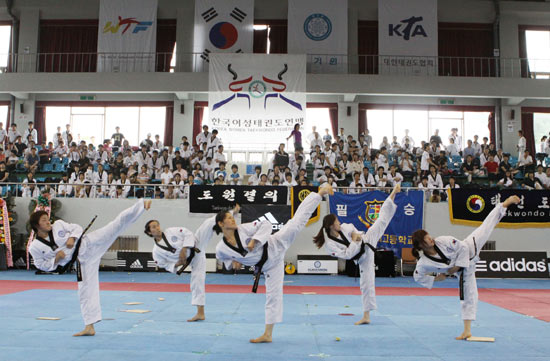
With the Seoul Olympics as a starting point, the globalization of Korean culture, society, and economy has depended in part on the global network of taekwondo, in which taekwondo masters have acted as highly successful ambassadors for the Korean culture. In this movement, none have been more effective than taekwondo masters in groups such as the Kukkiwon demonstration team, which has travelled to over 100 countries since its foundation in 1974. In the UK, one such performance by the Kukkiwon team inspired a local blogger to write that the Kukkiwon members had “surpassed their human limits [during the demonstration]” and met with “thundering applause” (Han). However, this appreciation and the overwhelming interest in the team have been directed not only at the members’ taekwondo abilities, but the message they deliver as representatives of Korean cultural arts. After one such demonstration in Maryland, the students of a local taekwondo school were inspired to take trips to the closest Korean Cultural Center, to explore exhibits on Korean culture, traditions, and the history of the Korea-US Alliance (Citro). In an interview, the students’ taekwondo instructor expressed great pride at the “love…for Korea and its famous martial art,” that had been inspired by the demonstration and taekwondo training, and the students’ subsequent “eager[ness] to visit Korea even once in their lifetime” (Citro).
Recognizing the great role that taekwondo has had in stimulating Korea’s globalization, and improving its image as seen by other nations, the Korea government has recently begun to support the work of taekwondo masters abroad, encouraging them to expand their activities to promote the Korean culture. In 2009, the Presidential Council on Nation Branding summarized its efforts as part of then-President Lee’s global public relations campaign for Korea. In addition to “sending more taekwondo performance teams abroad,” the plan has entailed the development of “taekwondo-related [media],” and release of an “online taekwondo manual” (Kim 126). As the purported goal of the council was to “increase [Korea’s] soft power,” taekwondo has been an invaluable medium through which the Korean government has been able to replace any western views of “South Korea as less relevant or important,” relative to its neighbors, with images of the taekwondo philosophy being carried out around the world (129). By facilitating and enhancing the spread of taekwondo as a key component in Korea’s public relations campaign, the Korean government has taken advantage of the trend started by the Kukkiwon team, using the martial art as a representation of Korea historically and in modern times, to help the Korean culture gain visibility in the global community. One method through which the Korean government has attempted to do this is by sending taekwondo instructors in missions to underdeveloped nations. In 2011, one such troop of Korean soldiers was sent to Haiti with the task of teaching basic taekwondo skills, and “introducing Korean culture through songs and dances” to local youth (“A Korean Legacy in Leogane: Taekwondo”). Though the troop also worked for UN construction projects in the area, the Korean culture classes had a lasting impact on the Haitian youth, as many students later expressed gratitude to the soldiers for “sharing their knowledge of a discipline” that unites “self-defense” and “meditation” (“A Korean Legacy in Leogane: Taekwondo”). As taekwondo has readily come to be accepted as a true symbol of Korea, the good works of taekwondo masters worldwide, completed in accordance with the taekwondo philosophy, have inadvertently begun to shape international perceptions of Korea in its global engagements.
The taekwondo spirit as the Korean spirit
The role that taekwondo masters played, as ambassadors of Korean culture, in Korea’s Olympic bid has already been widely acknowledged by the Korean government; yet the influence of the taekwondo philosophy in determining the tone of the Olympics is a critical but often overlooked aspect of this event. In the lead-up to the games, the Korean government declared the Seoul Olympics first and foremost a venue for international dialogue, establishing three of the five main goals of the event toward the fulfillment of a global agenda (“Report on Planning and Organization”). This agenda included showing “compassion”—the Seoul Games were the first to occur almost parallel to the Paralympics, granting equal importance to disabled athletes—and paving the way for “future legacy”—Korea’s successful hosting of the event was meant to “inspire courage in developing countries… towards national development” (“Report on Planning and Organization”). Especially in recent years, the Olympics have become known as a commercial venture and gambit for the hosting nation (for instance, the 2008 Beijing Olympics was solely focused on presenting Beijing and its citizens in the best possible light), so many countries were perplexed by the extent of Korea’s externally focused-goals (“Official Report of the Beijing 2008 Olympic Games”). However, the reasoning behind this decision is made evident by a brief examination of the Korean culture, especially in its connection to martial arts philosophy. Since the reign of the Silla hwarang warriors, the ideal person in Korean society had been one who sacrificed himself for the achievement of peace among one’s friends, and demonstrated goodness and virtue. This ideal has continued into the modern day, with current taekwondo schools placing similar emphasis on the moral philosophy of inducing peace. Likewise, in the Official Report on the Seoul Olympics, the Planning Committee attests to “Korea’s orientation toward peace,” and the “excellence of traditional Korean culture,” as important factors in the Olympics planning process. To a certain extent then, it was the beliefs of Korean martial artists, which contributed to the nation’s “peace-oriented” values that would motivate Koreans to plan their first Olympics with a beneficent agenda.
Since then, the taekwondo philosophy promoted and practiced by taekwondo athletes worldwide has become a central part of Korea’s global image; for instance, taekwondo athletes in countries that suffer from gender inequality, such as Tajikistan, have been at the helm of the movement for social justice. Members of the NTKF (National Taekwondo and Kickboxing Federation of Tajikistan) have ardently spoken out to “advance the rights and equality of women” in Tajikistan—a country that historically did not provide women legal protection against domestic violence—through presentations and by encouraging women to learn taekwondo as a means of self-defense (Boboev). While a draft law abolishing this practice was adopted in 2012, taekwondo schools remain a refuge for Tajikistani women, a place where all athletes are considered equal, and the determination to advocate for social equity is instilled in every practitioner. Taking into consideration the previously discussed work of taekwondo instructors in communities in Haiti, it is clear that the athletes for this martial art have become champions for social minorities, and supported movements for the “universal wellbeing of mankind.” As these taekwondo masters have begun to truly taken on the role of cultural ambassadors for Korea, the worldwide image of Korea has come to encompass such movements for social advocacy, and Korea has, in turn, incorporated this advocacy in its own global activities, notably as discussed in the humanitarian focus of the Seoul Olympics.
With its ties to the taekwondo movement and adoption of the philosophy, Korea has gained the opportunity to work closely with international bodies such as the United Nations, for the achievement of shared international goals. In 2013, in recognition of the work of the taekwondo peace corps, and the World Para-Taekwondo Championships, the United Nations Office of Sports and Development Program (UNOSDP) signed a memorandum with the World Taekwondo Federation, promising to work towards “common objectives… promot[ing] sport-for-all and peace” (“UN Special Advisor). While this agreement made taekwondo a unique tool in the achievement of the goals of the UN, it concurrently opened the door for collaboration between Korea and the UNOSDP. As the headquarters of the WTF, South Korea was invited to host the UNOSDP’s flagship project, the bi-annual Youth Leadership Program, three times, more than any other nation. In the past two years, this program has provided youth leaders from over 20 different nations the opportunity to exercise their leadership abilities and become initiators of international exchange by engaging in sports with other globally-minded youth. The partnership between the international institution of taekwondo and bodies like the United Nations has thus conveyed on Korea the chance to nurture future world leaders, and gain an image as a nation conducive to international exchange. Had it not been for the fortitude of taekwondo masters to battle injustice in countries like Tajikistan, or the appraisal of world taekwondo leagues as a force for global change, it is unlikely that Korea would be in the position it is today, as an invaluable partner to the UN and a firm proponent of social acceptance.  

Conclusion
Considering the dual role of the hwarang warriors as military leaders and religious seekers, and the worldwide presence of taekwondo instructors, it is evident that martial arts not only have influenced Korean society throughout history, but also have represented the globally influential Korean culture. The development of taekwondo reinforced the importance of Korean martial arts, and it quickly became an ambassador of the Korean culture, granting the country greater power to move the international sporting community, and the opportunity to host monumental events such as the Seoul Olympics. These events globalized Korea’s economy and society. Taekwondo masters have played critical roles of representing Korean culture and advocating social equality and worldwide development. Consequently, they had a profound impact on Korea’s image, and also promoted the country’s position in international engagements. In order to understand current Korea in the world, it is critical to recognize the importance of its martial arts culture, and the philosophy underlining taekwondo.


Works Cited
“A Korean legacy in Leogane: Taekwondo.” Sport for Development and Peace. UNOSDP, 2012. Web. 19 May 2015.
Capener, Steven D. “The History of Modern Taekwondo in Korea.” Taekwondo: The Spirit of Korea. n.p, 2001. Web. 16 May 2015.
Citro, Marissa. “World Champion Taekwondo Students Escape the DC Heat to Befriend Korea.” Dynamic-Korea.com, 2012. Web. 20 May 2015.
Han, Jeon. “Kukkiwon Demonstration Team shows off Taekwondo moves to the world.” Korea.net, 2012. Web. 21 May 2015.
Harmon, R Barry. “The Origins of Korea’s Martial Unreadiness.” 5000 Years of Korean Martial Arts. Indianapolis: Dog Ear Publishing, 2007. 21-25. Ebook.
International Taekwondo Federation. International Taekwondo Federation, n.d. Web. 25 May 2015.
Kim, Doug. “Martial Arts and Martial Sports.” The Koreas. Ed. Mary Connor. Santa Barbara, CA: ABC-CLIO, 2009. 322-331. Print.
Lama Yeshe. “Who is Maitreya Buddha?” fpmt. Foundation for the Preservation of the Mahayana Tradition, 2015. Web. 31 May 2015.
Lazore, Courtney. “The Hwarang Warriors—Silla’s Flower Boys.” Dartmouth’s The Quarterly of East Asian Studies. Dartmouth’s The Quarterly, 2014. Web. 1 June 2015.
Boboev, Parviz. “Martial artists fight gender discrimination, violence in Tajikistan.” United Nations Population Fund. n.p, 2015. Web. 21 May 2015.
 “Mr. Dae Sung Moon.” Olympic.org. n.p, 2015. Web. 20 May 2015.
 “Organization and Planning Volume 1.” Seoul Olympics Official Report. IOC Library, n.d. Web. 22 May 2915.
“Origins of Taekkyon.” Over View. n.p, n.d. Web. 21 May 2015.
“History of Taekkyeon.” Taekkyeon. World Public Library, n.d. Web. 19 May 2015.
Passport to Korean Culture. Seoul: Korean Culture and Information Service Ministry of Culture, Sports and Tourism, 2011. Ebook.
Sanfilippo, Jonathan. “Two Decades after the Seoul Olympics.” The Korea Times, 2007. Web. 31 May 2015.
Southwick, Ronald A. “A Brief History of Taekwondo.” Michigan State University, n.d. Web. 15 May 2015.
”Taekwondo.” Korea.net. n.p, 2015. Web. 21 May 2015.

“UN Special Adviser signs partnership agreement with the World Taekwondo Federation in Manchester.” Sport for Development and Peace. UNOSDP, 2013. Web. 19 May 2015.